RFID Freshness
Patent System
Extending passive RFID into condition sensing — moving freshness out of fixed dates and into the package itself.
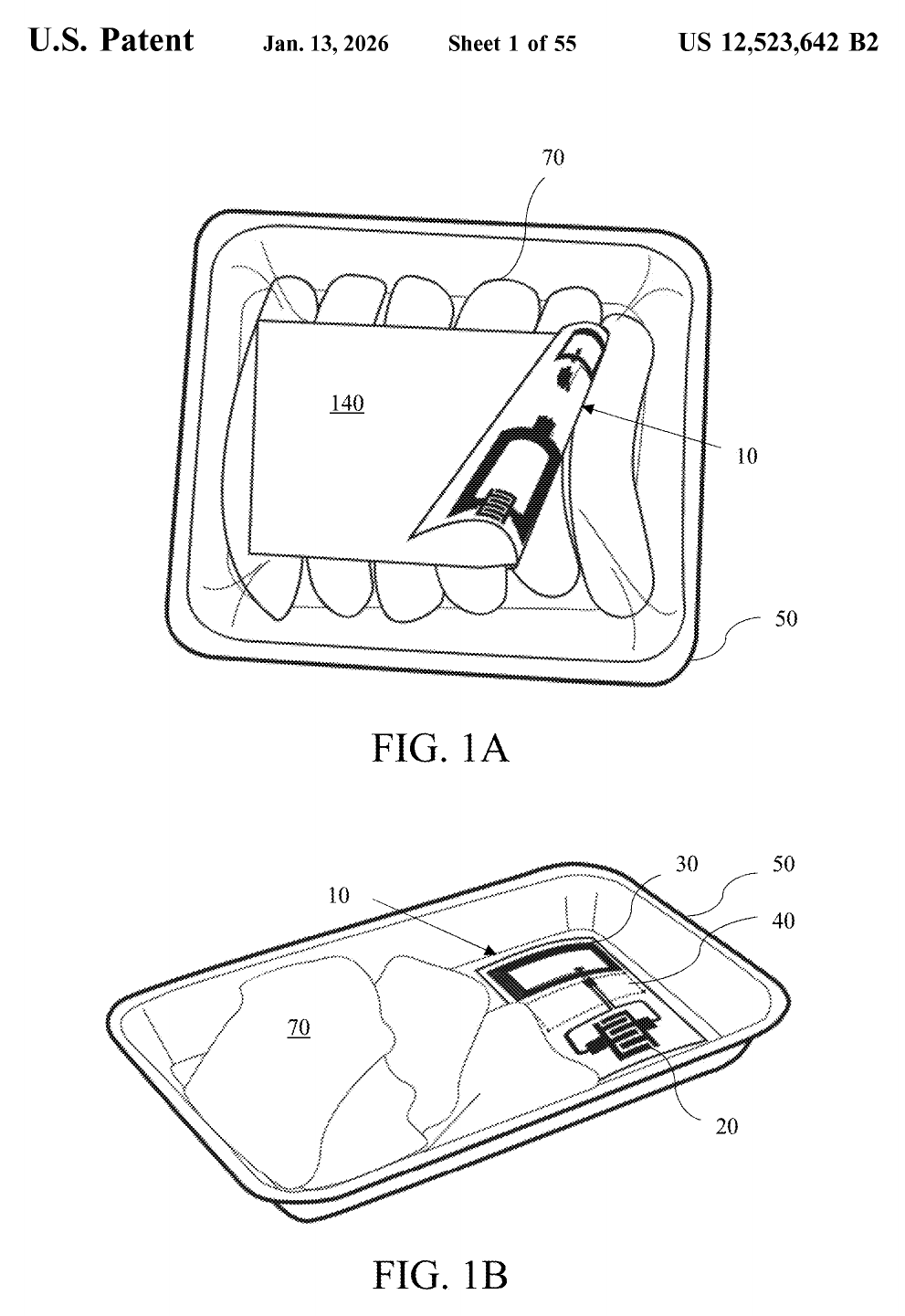
Most freshness systems still manage a condition problem with time-based proxies. Pack date, use-by date, and process assumptions are operationally convenient, but they are not the same thing as knowing what is happening inside the product right now.
This patent moves the sensing layer closer to where the decision actually matters: into the package, onto a passive RFID architecture, and through to an interpreted freshness signal rather than a raw lab output.
Protein does not age on a neat calendar. Exposure, temperature, handling, and microbial activity all distort the simple shelf-life story that retail systems prefer to tell. That leaves operators with a blunt instrument: static process controls standing in for live condition.
A useful freshness system has to survive contact with packaging, reading distance, manufacturing constraints, and user interpretation. Otherwise it stays a science project.
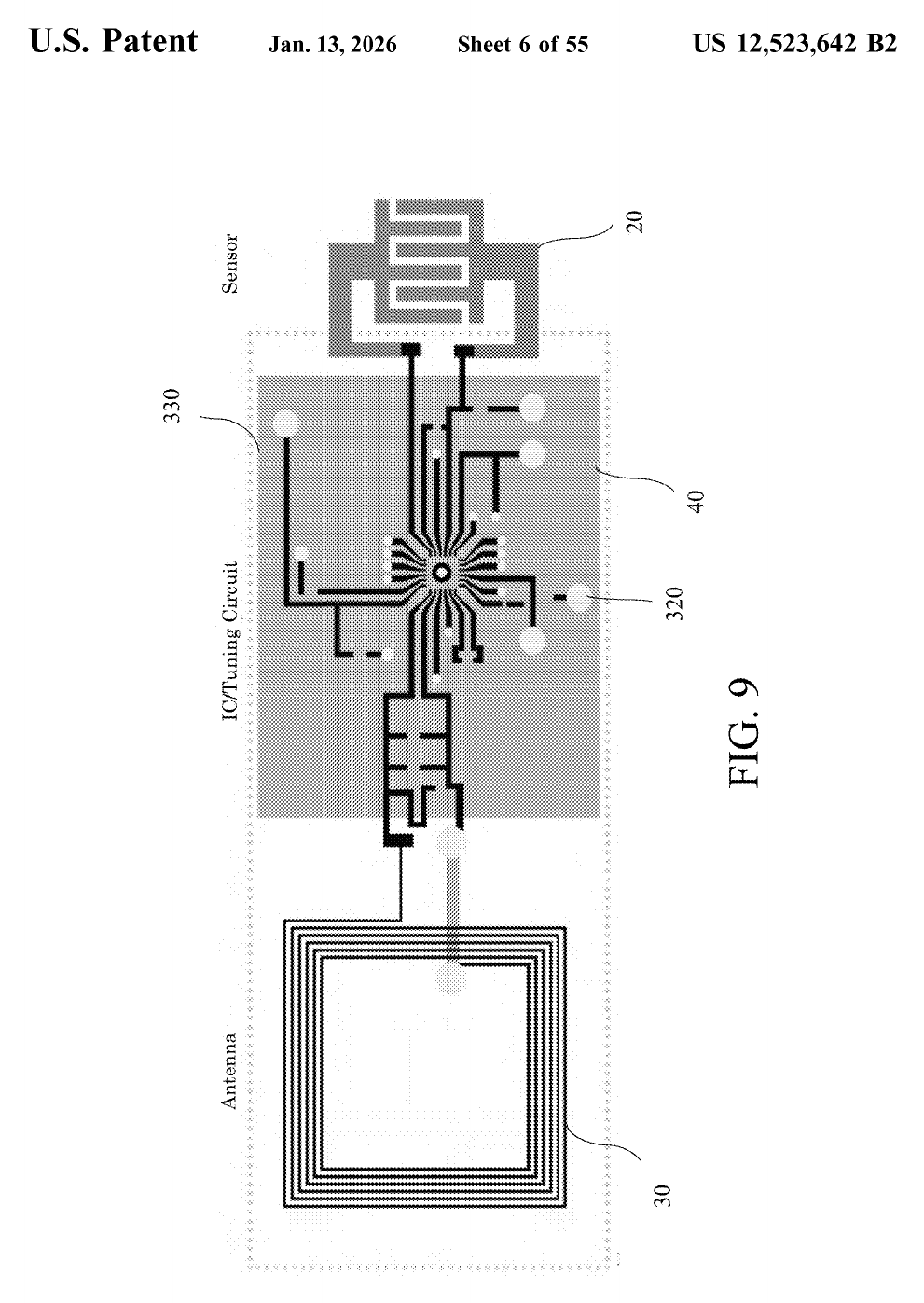
The patent frames a freshness device as an integrated RFID product: antenna, tuning circuitry, IC, and one or more sensing elements arranged so the tag can both communicate and respond to analytes associated with perishables. The device is shown at package level, not as a separate benchtop instrument.
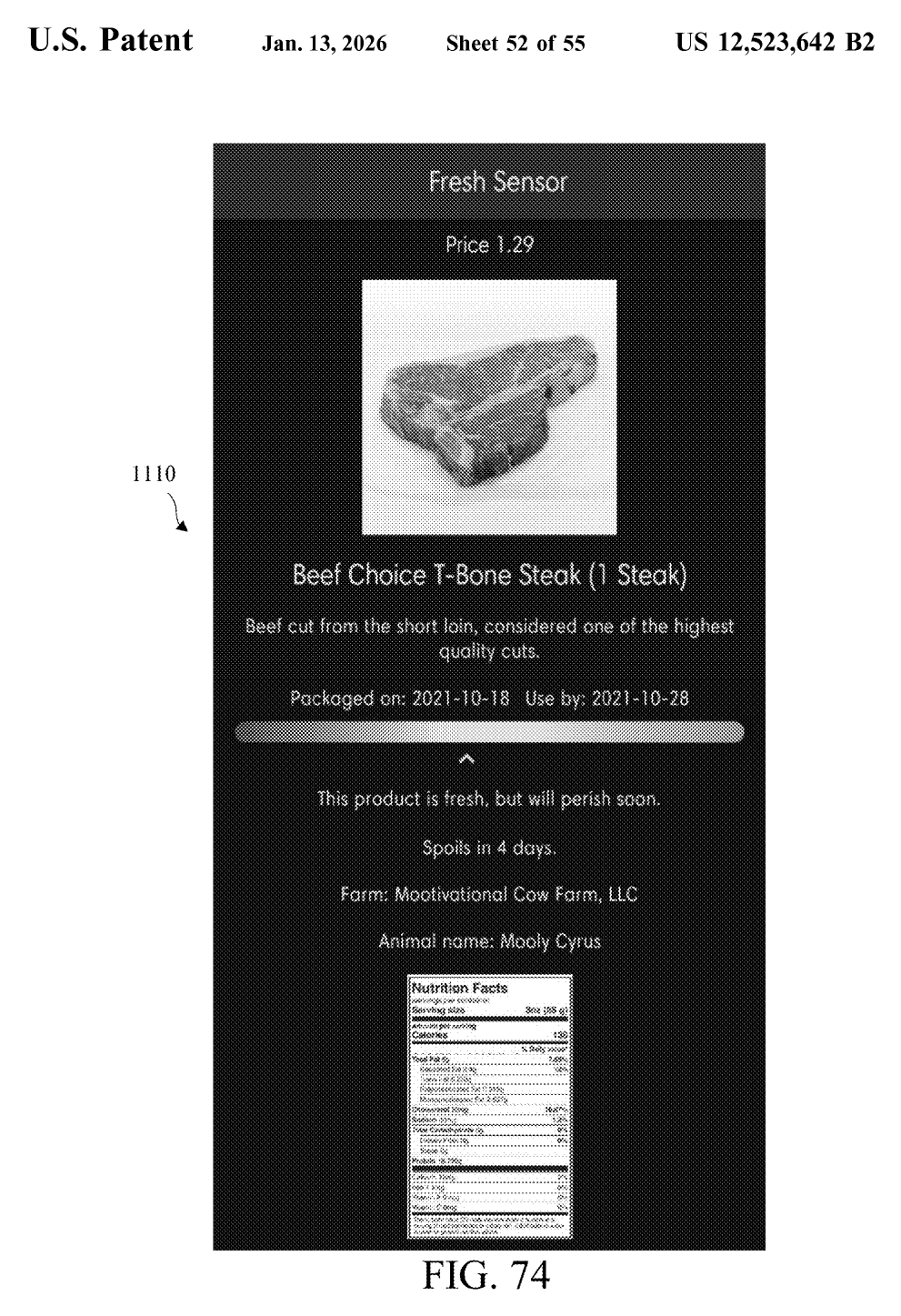
The drawings also push beyond a single fixed configuration. They show alternate layouts, multiple sensor cores, app interpretation, and packaging views that make the concept legible as a deployable retail architecture rather than a single experimental embodiment.
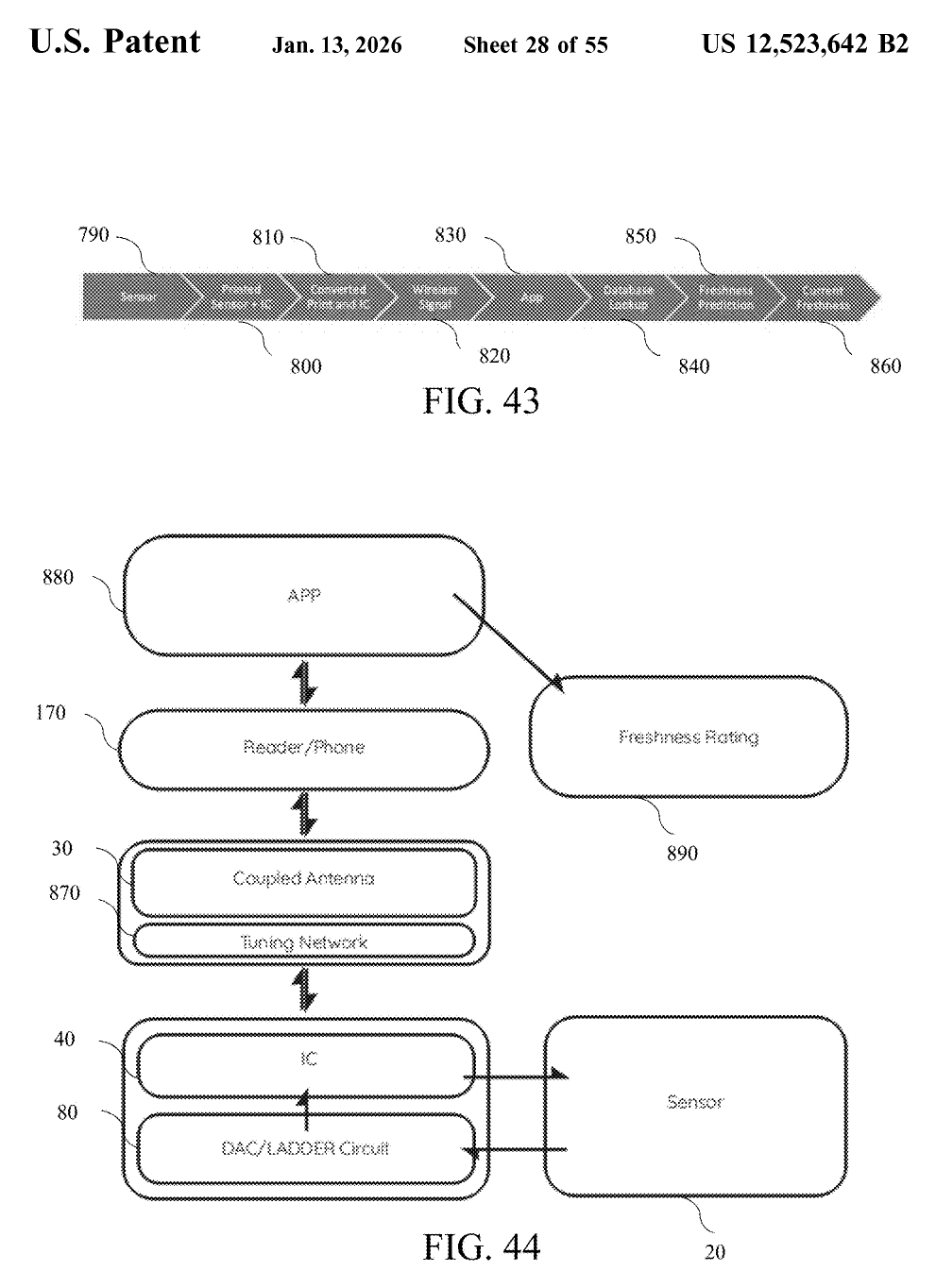
The interesting part is the system boundary. The patent is not just about a material response. It describes a chain from sensor behaviour to reader interaction to app-level interpretation. That is the difference between a laboratory effect and an operational signal.
- Sense a condition-linked analyte or electrical response
- Read the package through a passive RFID-style interaction
- Process the response through interpretation logic
- Return a usable freshness output rather than raw electronics data
There are a lot of smart-packaging concepts that never escape novelty because the architecture around them is too fragile, too expensive, or too disconnected from actual retail behaviour. This one matters because it is framed as printable, integrated, and interpretable.
That creates a credible path to condition-aware decision making at the unit level: not just where the product is, but how it is changing.
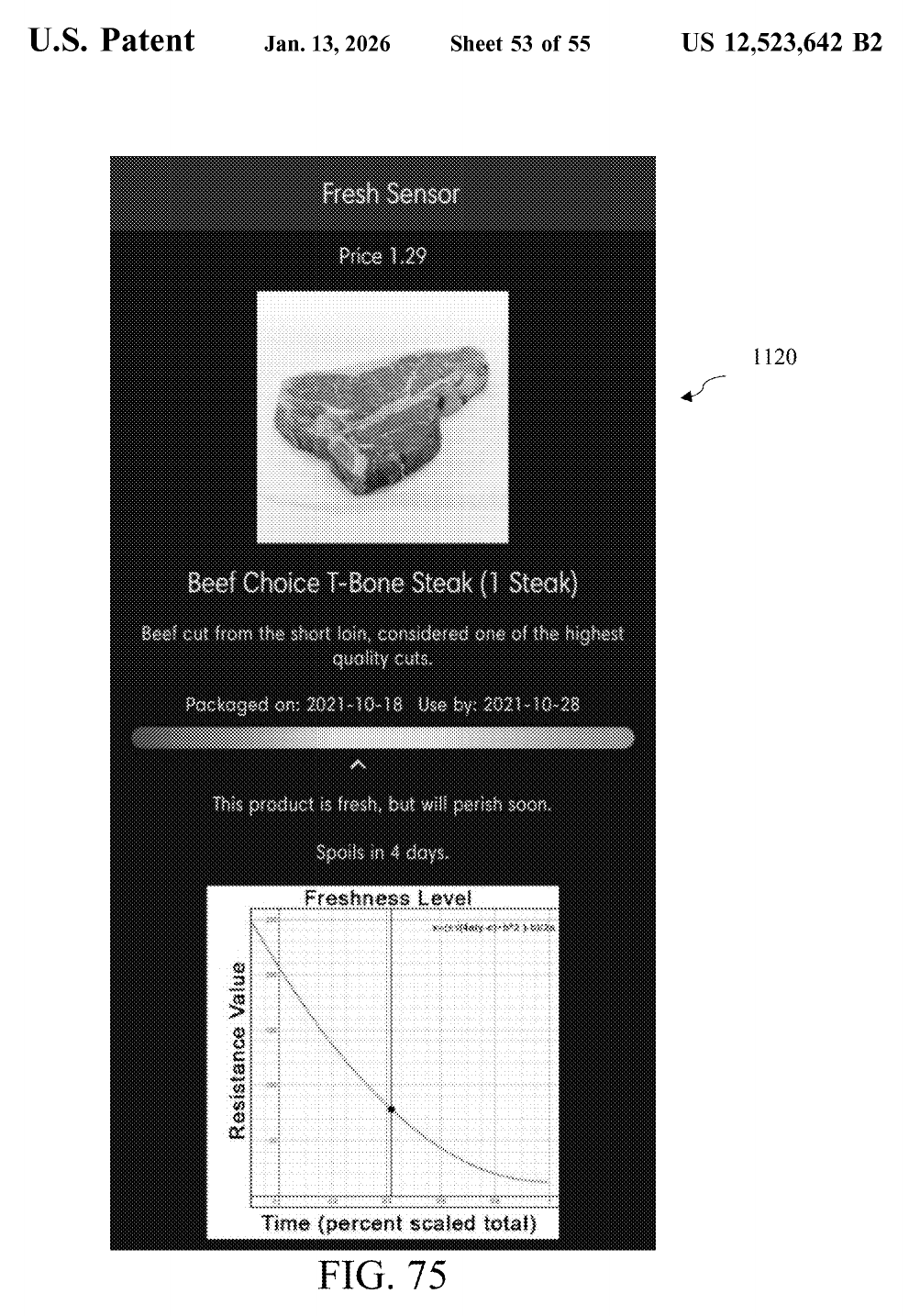
The later figures are useful because they show where this idea was headed: not just a hidden component inside packaging, but a readability layer for commercial or consumer use. The freshness signal becomes legible inside a mobile interface rather than staying trapped in instrumentation.
I’m interested in sensing systems that can survive the real path to use: packaging, manufacturing, signal interpretation, and human decision-making. This patent matters to me because it treats freshness not as a date-code problem, but as a package-level signal problem that can be translated into something operationally useful.
A freshness sensor only becomes valuable when the package, the reader, and the interpretation layer all make sense together.